Community Stories

Community Stories

Hear the voices of the coastal communities at the heart of our mission

  • Aljen Alamodin
    • Fisherfolk

    Aljen Alamodin

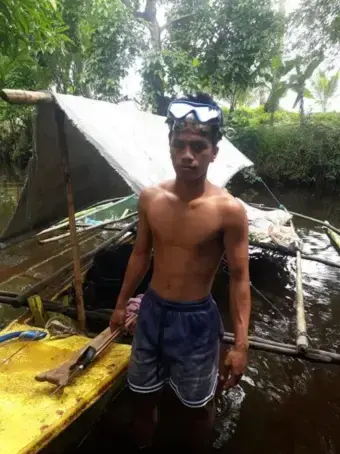
    I am Aljen Alamodin. I am twenty years old. A young fisherman, son of a fishing couple, Antonio Alamodin and Susan Alamodin. When my siblings and I were young, we were trained in our parents' work [fishing]. They showed us that diligence and perseverance are the secret to rising in life. Because I got married early and have a child, I go out to sea with my parents to fish in order to provide for my family. In fishing, I saw that I would have enough income to support my family and that perseverance and planning are the secret to success, and not dependent on the type of work you have. We don’t catch a lot all the time – there are days when our catch is just enough to serve as our food for the day and we are not able to sell anything Since I am young, I still have a lot to learn. I still have a lot to learn about making a living, especially in fishing. So I was glad to have the Hub in our town. This is a big thing for our fishermen because we will learn a lot about new technologies that will help our livelihood, especially among the youth. Because they say “Youth is Hope.” I also want to convey to the youth who are losing hope and those that married and had families at an early age, that there are nothing can stop us from lifting our lives, you only need perseverance and diligence.
  • Analyn Calicoy Quiminales
    • Women

    Analyn Calicoy Quiminales

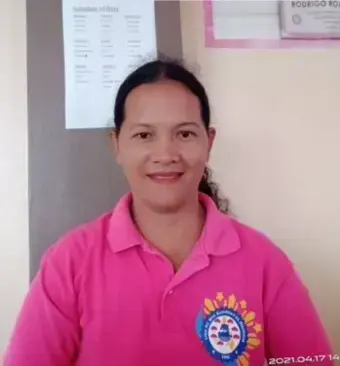
    I am Analyn Calicoy Quiminales, a fisher and a member of the Handicraft Group. When my son was still young, I just stayed at home to take care of him. But when he grew up, I started helping my husband in fishing. Then when I got pregnant again, I am just staying at home as a plain house wife with no source of income. When I became a member of the Handicraft group, I observed that I am always busy. The extra time before that I used to watch television and sleep, is now being used to work to become more productive. At first when, Ma’am Marge asked us to choose the group we want to join, it has always been in my mind to join Handicraft group, because of my interest in arts. When I watch television, design and handicraft products always catch my attention. I even made Christmas Tree decorations out of the old clothes of my baby instead of buying new plastic flowers for Php10.00 each. During the trade fair, the most challenging part was the bad weather condition. Each of us, has to make one “banig” for the trade fair. So we decided to pick a lot of “bariw” leaves to be used as the material for our “banig”. However, due to the rainy weather, we were not able to dry the leaves. The raw materials darken because of the moisture and some even grew molds. To save the materials, we decided to dye the leaves to make bags. We were able to make a few but most of the materials were thrown away. It was heartbreaking and sad, because we already invested so much time, effort and money. But then and there, we were able to come up with an idea to make shell crafts. We asked for permission from Ma’am Marge and then looked for washed off shells in the shore. We were careful in picking the shells, as not to use endangered ones and even small ones. Despite that, by all truth, my groupmates were scared about the huge capital that we have. They even wanted to give it back because they were not confident that we will succeed. But I told them, that with, we will be able to succeed one day. With the biggest amount given to us among all the groups, I told them that we also have the biggest chance to make more products. But among everything, I am most grateful to GDFI and G2A, because if not for them, we will not have a stronger and better house than we had before. I am also thankful that their generosity did not stop on the housing project but extended to provide as livelihood opportunities which are now giving us extra income to support our families.

  • Lilybeth Tebrero
    • Women

    Lilybeth Tebrero

    I am Lilybeth Tebrero, a member of the Herbal Group. We are not direct beneficiaries of the Give2Asia Housing Project in Maliwaliw Island, but my parents were. When my father passed away in November 2018, we became the beneficiaries of his housing unit. Our original house is within the 40km danger zone at Sitio Kabarasan. We are one of the 3 remaining families at the coastal area with concrete houses. I have 8 children, and we needed a minimum space to fit all of them comfortably. My husband is a teacher at the barangay elementary school. Although we have a regular source of income it was not enough for us to transfer right away to the village because we did not have enough savings to build an extension. During rainy season, we usually transfer to the G2A Village, but normally we still live at our old house. During the Typhoon Ursula, we were supposed to transfer to the G2A Village before landfall, but we were pre-occupied preparing food before we evacuate. The typhoon landed while we were still in Kabarasan, we saw how the water rose as we run towards the village. We saw our windows shattered and the water entering our house. We were running with the water already increasing up to our knees. When we reached the elementary school, we decided to go inside since the wind was so strong and we couldn’t proceed to the village anymore. At the evacuation center, we observed that it was not resilient enough to withstand stronger typhoons. The windows were broken, and the ceilings are dripping with water. After the typhoon, when we transferred to the Village, we observed that only the front window of our house was damaged. At that point, my husband and I regretted, we knew better, we were both trained and were able to attend the trainings given by GDFI, but still we chose convenience over safety. While we were evacuating, our children were crying, they were traumatized because of what we experienced. Right there and then, we decided to transfer as soon as possible to the village. We transferred what we saved from our house to the village and we will slowly construct an extension.” Lilybeth and Chris shared their story to other residents still living in coastal areas. Lilybeth said “We learned our lessons the hard way, we risked the lives of our children over convenience and attachment to our old house. We are thankful to G2A and GDFI for the housing grant that we are now living in. We are thankful that it was not too late to actually do the right thing.

  • Lourdes Basilides
    • Women

    Lourdes Basilides

    I am Lourdes Basilides a widow with 4 children. Currently I used to live with my son and grandchild and his family. G2A and GDFI greatly helped our family specially that I have thyroid problem for a long time now. It was so hard for me as a mother to depend on my children for food and medicine. After Super Typhoon Yolanda, we were one of the families who lost all their properties including houses. The only livelihood I know since I was child is fishing, so when I was advised by the doctor to stop, I was devastated. I am thankful to G2A and GDFI for giving us a house and an opportunity to earn even at home. Before, I already knew how to process Bariw and make bags and “banig” (mats) out of it. However, it was hard for me to produce in volume because of my condition. When G2A and GDFI supported women with trainings on Handicraft Production, I was so happy. I thought to myself that, at least if I could earn some money, I could help my children in our expenses specially my medication. After the trainings, I actively participated in our small livelihood project. We process bariw during mid-day and bake bread (the local way) in the morning and afternoon. Because of the trainings given by GDFI, we were able to grow our capital. For the past 2 years, I am proud to say that through the opportunity given to us I was able to buy a new bamboo sala set, glass jalousies for my windows, and buy my regular medication. I was able to give some small amounts to my children and grandchildren as well. When I thought I was a burden to my family already, the women’s livelihood helped me to earn despite my condition. During the lockdown, the pandemic gave way to an opportunity for us to sew and sell facemasks, while we continue selling bread and offering sewing services. Our group was able to share out almost 10k for each of us from our sales in mask production. The masks distributed by G2A and GDFI were made by our group. I felt good being productive at my age, being able to help during the pandemic and by not being a burden to my family anymore. I saved some of my shares from our small livelihood and hopefully soon, I would be able to undergo operation for my thyroid with the help of my family. From a widow who still support her son and grandchild, I am forever thankful to G2A and GDFI for the opportunity and support they provided us.

  • Marilou Abanador
    • Women

    Marilou Abanador

    I am Marilou Abanador, a G2A Villager and member of the Herbal Group. The coming of the Typhoon Ursula tested the capacity of the village and even the individual families to mitigate the effects of the hazard to our properties. The trainings, seminars and workshops came in handy while preparing for the typhoon. The initial report from the radio, said the intensity of the typhoon is only signal #2, which is usually a non-destructive level of wind and rain. Despite these initial reports from radios and National Disaster Risk Reduction Management Council alert messages the actual intensty of the typhoon when it re-routed and landed in Salcedo was already in category 3. Most of the families outside the village, were confident and busy with the preparation for Christmas eve. But my husband and I, focused on preparing for the typhoon. We secured our motorboat, tied it inside the mangrove area and detached the engine. My husband covered and nailed our windows with ply woods to protect us from the entry of wind and rain. He also cut the branches of our fruit trees to avoid falling branches hitting our roof, and to avoid the trees from being uprooted.” According to Marilou, some of the residents who saw them preparing for the typhoon days before landfall, laughed at them by being overly prepared. “People were laughing at us, but we believe that in times of calamity, there is no harm by being overly-prepared”. After the typhoon, their house was hardly damaged, their extension needed minimal repair and their motorboat was saved.

  • Melanie Betorio
    • Fisherfolk

    • Women

    Melanie Betorio

    The fisherman’s life is no joke, it doubles the risk to your life, especially if the weather is bad and when your engine is having trouble. I am Melanie Betorio, living on the island of Trinidad Tubabao. Fishing is what we count on to survive. In today’s era we are affected by poverty and by the pandemic going on in the world, especially when fish and crab catches are scarce or very small. It is difficult to budget if the daily income is minimal, especially for family needs, such as food and my children's educational supplies. So even if the weather is bad, we will be patient and go to sea to afford family expenses. Another big impact on our fishermen is the relentless illegal fishing that is destroying marine resources. Because of this, we catch very little. We also have the fear of our nets being stolen, as they are our primary source of income. Another challenge for us is the rising price of commodities, especially fuel which often costs more than our income. But despite all this, we will continue to work for our family.