Overview & History
Trace our journey from a humble grassroots initiative to a region-wide movement
Overview
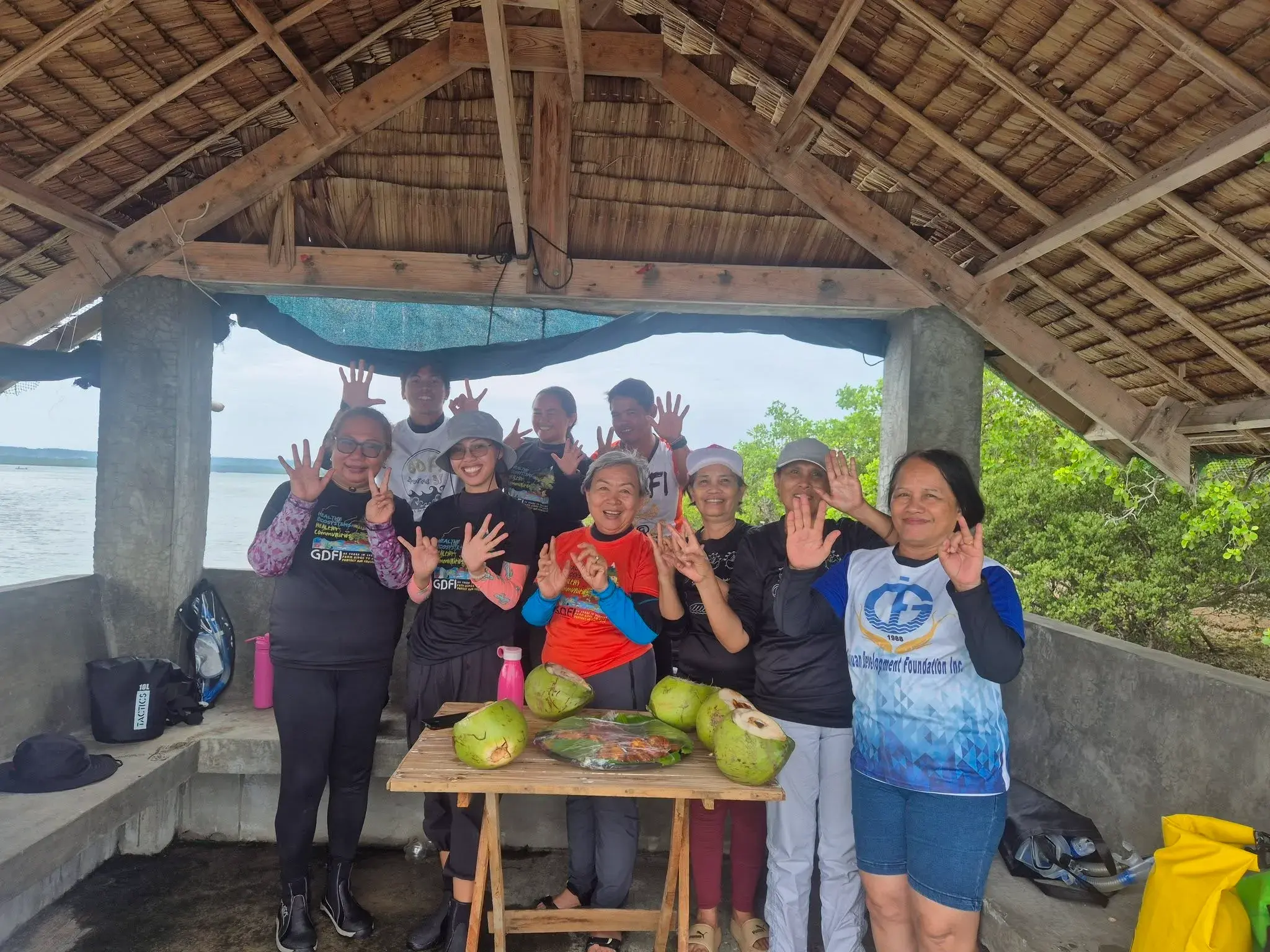
Guiuan Development Foundation, Inc. (GDFI) is a nonstock, non-profit, non-governmental organization committed to empowering coastal communities, protecting the environment, and conserving natural resources. We operate in 7 coastal municipalities in Eastern Samar, from Guiuan to Lawaan.
Our History
During the 1980s, the coastal municipalities of southern Samar Island faced a severe ecological crisis. Rampant illegal practices, including dynamite and cyanide fishing, were rapidly depleting marine resources and threatening the livelihoods of the 40,000 residents who heavily depended on the sea. Driven by a deep concern for these vulnerable fishing communities, Prof. Margarita de la Torre - de la Cruz, then a faculty member at the University of the Philippines Visayas Tacloban College (UPVTC), took decisive action to organize a response.
On August 30, 1988, Prof. de la Cruz officially established the Guiuan Development Foundation, Inc. (GDFI) as a non-stock, non-profit organization dedicated to empowering coastal communities and conserving natural resources. Following its SEC registration in April 1989, GDFI launched its flagship program: Community-Based Coastal Resources Management (CBCRM). Recognizing that true resource stewardship requires broad, interconnected action, the CBCRM program expanded significantly in 1995. Originally operating in Guiuan, Mercedes, and Salcedo, it grew to include Quinapondan, Giporlos, Balangiga, and Lawaan. Together, these seven municipalities share the critical waters of the northern Leyte Gulf.
For 18 years, GDFI laid the groundwork through intensive community organizing, establishing marine sanctuaries, and promoting environmental education. In 2006, this grassroots empowerment evolved into structural policy when GDFI initiated the formation of the Alliance of Seven Municipalities for Integrated Coastal Zone Management (A7 for ICZM). This landmark alliance successfully engaged Local Government Units (LGUs) to take a major, collaborative role in protecting and managing their shared waters.
Resilience requires constant adaptation. Following the devastation of Super Typhoon Haiyan, GDFI critically re-evaluated its vision and mission to address modern climate realities. The foundation adopted a holistic "Ridge to Reef" approach for all succeeding programs, explicitly incorporating Disaster Risk Reduction and Climate Change Adaptation (DRR-CCA) to ensure that both the coastal ecosystems and the communities that rely on them can withstand future environmental challenges.